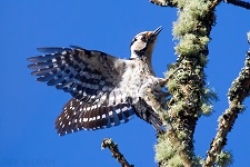
Lesser Spotted Woodpeckers 2023 spring update
- Details
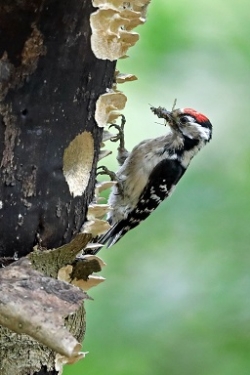
All records of Lesser Spots in February or March are important as their presence at this time of year of is a good indication that they may be breeding in the area.
Records are needed to monitor their current population and how well they are doing in an area.

Lesser Spotted Woodpeckers in 2022 report
- Details
Woodpecker Network Breeding Season Report *
Another interesting and successful year for Lesser Spotted Woodpeckers in 2022. Thanks to the efforts of all our volunteers and collaborators we were able to collect breeding data from 19 nests. These were relatively successful with an average of just over 3.0 young fledged per nest which was the second best season since we started the monitoring in 2015 (8 years in total).

Great Spotted Woodpecker - nest hole orientation
- Details
Which way to face ? Nest hole orientation of Great Spotted Woodpeckers
Poster presentation by Ken Smith and Linda Smith for the Hole-nesting Birds Conference held in Oxford from 7-9 September 2022
As primary cavity excavators, woodpeckers choose exactly where to excavate their nests and would be expected to select sites to maximise their fitness.
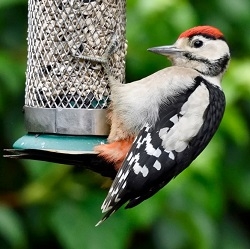
Is your Woodpecker a Lesser Spot or a Great Spot?
- Details
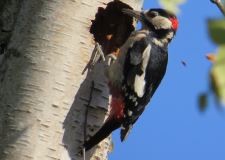
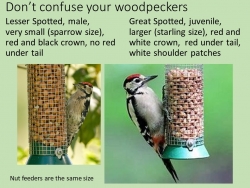
Great Spots are found widely throughout Britain, they are common in woodland and readily visit garden feeders. Lesser Spots are scarce and rarely seen. So you are much more likely to see a Great Spot than a Lesser Spot. But young Great Spots have a red head - don't confuse tham with a male Lesser Spot.
You can easily tell the difference………..

Finding Lesser Spotted Woodpecker nests
- Details
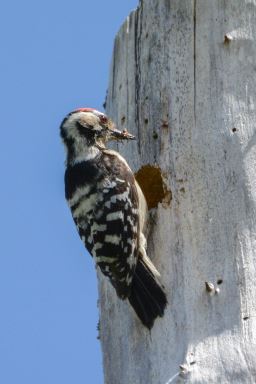
Here are some tips for finding and monitoring woodpecker nests, especially Lesser Spots based on the experiences of our volunteers.
Go to an area where you saw or heard LSW earlier in the year. Spend time in the area and: